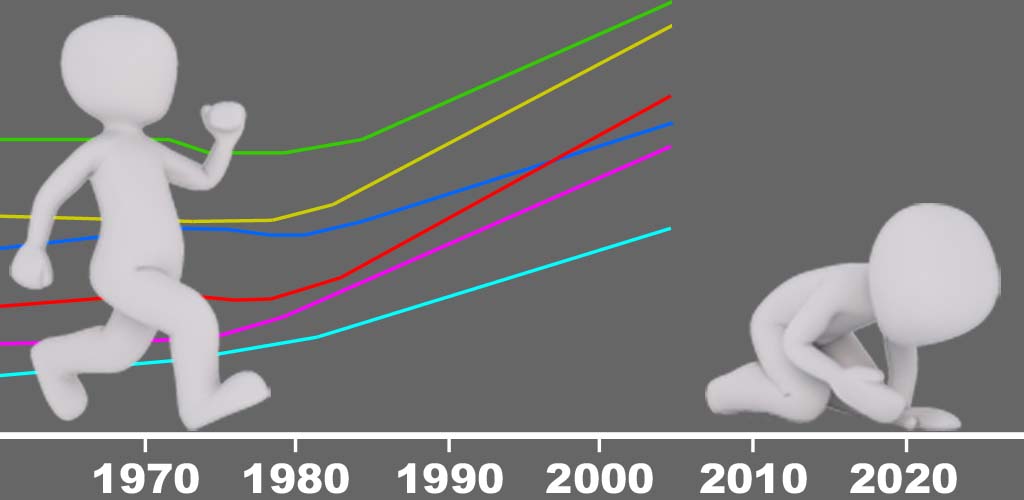
Why did we recover faster 50 years ago?
Research shows how ultra-processed food tricks the brain
Underlying inflammation reduces health

For 50 years ago, we recovered faster from illness, tragedies and trauma according to doctor Patrick.
In the 80s, obesity and ill health exploded in all age groups.
Many have an underlying inflammation that puts a strain on our health, although often we don’t notice it. It is only when we are struck by illness and tragedy that we notice that the body does not seem to have enough energy to fully recover
Make processed food irresistible
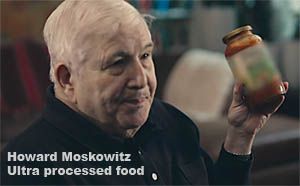
Howard Moskowitz tells how he was hired by major food manufacturers to make processed food irresistible.
Food companies as Campbell, General Foods, Kraft and Pepsi wondered how to make food more appetizing.
Moskowitz said that we make many different recipes and test what is the best.
Find the lucky point
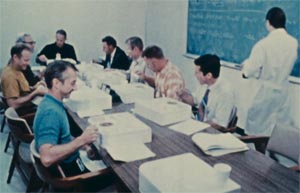
Test subjects were given different recipes and they filled the food with sugar, salt and fat to see where the limit was before they felt sick.
The goal was to find the lucky point, the amount of sugar, salt, or fat in processed food that makes it irresistible.
Then the food manufacturers continued to find the lucky spot for most of the products that they then made millions of dollars on.
Cheese bows have a high energy density
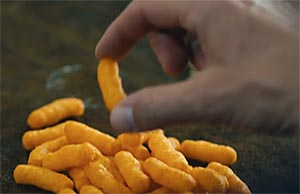
Cheese bows melt in your mouth and the chewing resistance disappears at the first bite.
Calculated per gram, cheese bows have far more calories than fatty burgers, cheese bows have a high energy density.
In addition to creating an attractive taste for food, consultants were also hired to create special sounds such as cheese bows.
Study about ultra-processed food
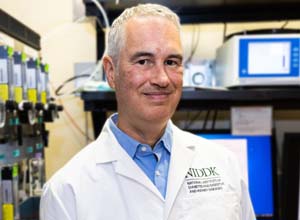
Researcher Kevin Hall led a food study in 2019 in which dietitians gave the same amount of sugar, salt, and fat to 2 different test groups for a month.
One group would only eat ultra-processed food while the other group would eat minimal ultra-processed food.
Those who ate ultra-processed foods ate 500 calories more per day, which over time began to cause obesity and ill health.
Ultra-processed food tricks the brain
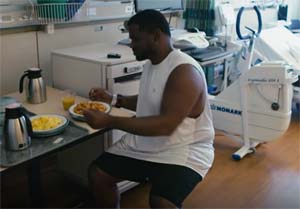
The 2 test groups of 20 people lived in a clinic for a month and dieticians checked everything, weighed how much they ate and left behind.
Ultra-processed food gets a taste and texture so it can be eaten quickly so that the brain is fooled and overeating occurs.
In nature, there is not such a high energy density as there is in ultra-processed food.
Food manufacturers care more about money than human health, therefore ultra-processed food is a disaster for public health.
Dangerously good Ultraprocessed food
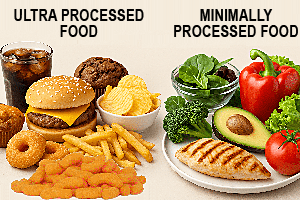
Ultraprocessed food:
-tricks the brain into eating too much
-too much sodium salt
-cheap fats such as palm oil
-too much processed sugar
Our brain, liver, and kidneys become overloaded by ultra-processed foods with too much salt, fat, and sugar.
This overload can causes underlying inflammation that causes obesity but above all makes it difficult for our body to heal and recover from illness and tragedy and can lead to fatigue.
Two types of inflammation

When the patient has had long-term fatigue or illness and comes to the doctor, they usually take tests (CRP) that indicate if there is any inflammation that can cause fever.
But if there is no fever, the patient is often sent home by the doctor with the words “it’s probably not inflammation”.
But unfortunately, the other type of inflammation that doesn’t cause fever is often overlooked.
This is when external and internal factors have made the immune system over-activated month after month and eventually it can lead to fatigue and also autoimmune diseases.
In more detail, it is about the immune system’s glial cells, which are overactive and secrete cytokines. Normally, glial cells should return to their dormant state after a few weeks of inflammation and stop secreting cytokines.


Saldeen T. Fiskolja och hälsa med fokus på naturlig stabil fiskolja. SwedeHealth Press. Упсала 1-64, 1997.
Mason RP, Sherratt SC. БАДы с рыбьим жиром, содержащие омега-3 жирные кислоты, содержат насыщенные жиры и окисленные липиды, которые могут препятствовать их предполагаемой биологической пользе. Biochem Biophys Res Commun. 2016 Dec 21. pii: S0006-291X(16)32187-8. [Epub ahead of print].
A.C. Kleiner, D.P. Cladis, C.R. Santerre. Сравнение фактического и заявленного на этикетке количества ЭПК и ДГК в коммерческих омега-3 диетических добавках в США
J. Sci. Food Agric., 95 (2015), pp. 1260-1267.
B.B. Albert, J.G. Derraik, D. Cameron-Smith, P.L. Hofman, S. Tumanov, S.G. Villas-Boas, M.L. Garg, W.S. Cutfield Добавки рыбьего жира в Новой Зеландии сильно окислены и не соответствуют содержанию n-3 ПНЖК Sci. Rep., 5 (2015), p. 7928.
J.A. Berliner, A.D. Watson A role for oxidized phospholipids in atherosclerosis N. Engl. J. Med., 353 (2005), pp. 9-11.
M. Bertelsen, E.E. Anggard, M.J. Carrier Окислительный стресс ухудшает интернализацию инсулина в эндотелиальных клетках in vitro Diabetologia, 44 (2001), pp. 605-613.
J.W. Baynes Роль окислительного стресса в развитии осложнений при диабете Диабет, 40 (1991), с. 405-412.
R. Turner, C.H. McLean, K.M. Silvers Ограничены ли полезные свойства рыбьего жира продуктами окисления? Nutr. Res. Rev., 19 (2006), pp. 53-62.
M.F. Walter, R.F. Jacob, R.E. Bjork, B. Jeffers, J. Buch, Y. Mizuno, R.P. Mason Циркулирующие гидроперекиси липидов предсказывают сердечно-сосудистые события у пациентов со стабильной ишемической болезнью сердца: исследование PREVENT J. Am. Coll. Cardiol., 51 (2008), pp. 1196-1202.
M.F. Walter, R.F. Jacob, B. Jeffers, M.M. Ghadanfar, G.M. Preston, J. Buch, R.P. Mason Сывороточные уровни реактивных веществ тиобарбитуровой кислоты предсказывают сердечно-сосудистые события у пациентов со стабильной ишемической болезнью сердца: продольный анализ исследования PREVENT J. Am. Coll. Cardiol., 44 (2004), pp. 1996-2002.
Läkemedelsverket: Ateroskleros – Livets fiende nr 1 [Internet: http://www.lakemedelsvarlden.se/nyheter/ateroskleros-%E2%80%93-livets-fiende-nr-1-1331]
Internetmedicin. Ateroskleros (åderförkalkning) [Internet: http://www.internetmedicin.se/page.aspx?id=2787].
N. Ламхарзи, К.Б. Ренар, Ф. Крамер, С. Пеннатхур, Дж.В. Хайнеке, А. Чаит, К.Е. Борнфельдт
Гиперлипидемия в сочетании с гипергликемией стимулирует пролиферацию макрофагов в атеросклеротических поражениях: потенциальная роль окисленных глюкозой ЛПНП. Диабет, 53 (2004), стр. 3217-3225.
P. Либби, Воспаление при атеросклерозе. Nature, 420 (2002), pp. 868-874.
M. Rizzo, K. Berneis Размер липопротеинов низкой плотности и оценка сердечно-сосудистого риска QJM, 99 (2006), pp. 1-14.
S. Koba, T. Hirano, Y. Ito, F. Tsunoda, Y. Yokota, Y. Ban, Y. Iso, H. Suzuki, T. Katagiri Значимость концентрации холестерина липопротеинов низкой плотности в отношении тяжести ишемической болезни сердца Atherosclerosis, 189 (2006), pp. 206-214.
J. de Graaf, H.L. Hak-Lemmers, M.P. Hectors, P.N. Demacker, J.C. Hendriks, A.F. Stalenhoef Повышенная восприимчивость к окислению in vitro плотной субфракции липопротеина низкой плотности у здоровых людей Arterioscler. Thromb., 11 (1991), pp. 298-306.
M. Yokoyama, H. Origasa, M. Matsuzaki, Y. Matsuzawa, Y. Saito, Y. Ishikawa, S. Oikawa, J. Sasaki, H. Hishida, H. Itakura, T. Kita, A. Kitabatake, N. Nakaya, T. Sakata, K. Shimada, K. Shirato Влияние эйкозапентаеновой кислоты на основные коронарные события у пациентов с гиперхолестеринемией (JELIS): рандомизированный открытый слепой анализ конечных точек Lancet, 369 (2007), pp. 1090-1098.
D. Firestone Официальные методы и рекомендуемая практика Американского общества нефтехимиков (четвертое изд.) Американское общество нефтехимиков, Шампейн, ИЛ (1997)
 RU
RU  EN
EN  SV
SV  ES
ES  KO
KO