
Recover from Trauma & PTSD
Many suffer of Trauma & PTSD without knowing it
My car started to burn – traumatic experience
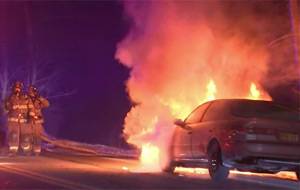
One evening I was driving a car from Stockholm and turned off the main road towards Farsta suburbs and the strange thing was that the visibility in the car got worse and worse, but I drove on.
Suddenly there were big flames coming from the bonnet. It was completely unreal, at first you wondered if you were in a Hollywood movie or if it was real, “this can’t be true, this isn’t happening to me”.
Finally I stopped and had to open the door because it was so “bad visibility”. Then noticing the difference in visibility outside the car, I realized that this is not a surreal movie or a dream but serious and took the most important thing out of the car. After a while a fire truck came and put out the fire.
It was a traumatic experience from which I coped well, but it was totally unreal when it happened.
Near drowning gave PTSD
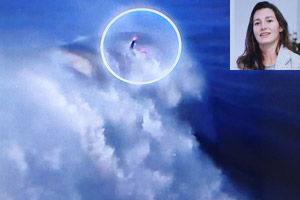
The picture shows surfer Nicole and she talks about the traumatic experience after the fall in the wave: “I couldn’t breathe for three days. I got PTSD, even small waves scare me.”
Nicole is an experienced surfer and the incident occurred on the west coast of Portugal.
Some suffer from trauma or PTSD without knowing that it is due to the drowning experience as a child or later in life.
Experience trauma without knowing it
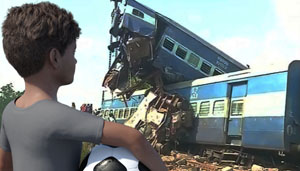
Many people have experienced trauma without knowing it. Because the word trauma sounds so dramatic, most people assume that only those who have survived a disaster like when a ferry like Estonia sank has been through trauma.
If a child accidentally witnesses a traumatic accident as a child, it can leave deep inner scars that are only felt later in life. Because most people think it was nothing and go on with their lives as if nothing had happened. But in adulthood, stress or irritation and anger can often surface over small things and the reason may be that the childhood trauma has run far deeper than imagined.
The problem is that people can be misdiagnosed with ADHD or autism when they actually are influenced by Trauma & PTSD and then they may not get the right kind of help.
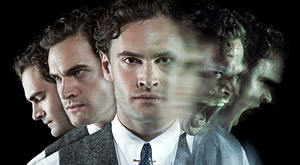
Jekyl & Hyde
Some people show a normal side one moment, but at other times they may show a different side with irritation or anger. Wow, that’s like Jekyl and Hyde, people around might think.
But the answer to why they reacted so strongly may be because they had experienced trauma that became PTSD.
(The concept of Jekyl and Hyde comes from a story about a person who had 2 personalities, a friendly side and another angry side.)

Trauma and PTSD
When soldiers from the Vietnam War came home to the US with severe depressive symptoms, research began to find the answers and help them.
Since 1980, PTSD has been used as a medical term to indicate that something traumatic has left a deep mark on a person. PTSD stands for Post Traumatic Stress Disorder and is not a disease but a kind of neurological impact or injury.
In addition to war, traumatic events such as abuse, violence, tragedy, infidelity, accidents and natural disasters can cause PTSD. For some, the symptoms eventually go away on their own, while others may experience psychological trauma that leaves them with symptoms. Unfortunately, many people suffer from PTSD without knowing it, because they explain away what they have experienced as “it wasn’t that serious”.

Symptom
Symptoms often appear within a few months of the traumatic event. But it can also take longer, up to decades after the trauma, and for children it may show up differently.
Common symptoms are:
-sleep disorders
-nightmares and flashbacks
-memory loss or blackout
-depressed or indifferent
-stressed, tense or irritable
-pain like headache or back pain
-heart palpitations or high blood pressure
-avoids anything that reminds of the event
If a child is bullied at school, it can lead to Trauma and PTSD, which causes the person to avoid everything related to school. The school and teachers did not stop the bullying therefore the child may feel that the school is the problem. Sometimes it does not help if the child has to change schools because everything associated with school can cause unpleasant negative feelings.

PTSD and the family
Since Steve developed PTSD, his whole family has been affected. He is depressed, sad and irritable with constant nightmares. So it’s a relief for Steve to finally see his invisible PTSD injury on the computer screen after the advanced X-ray examination.
Steve was on a rescue exercise in the Arctic when a charter plane crashed right where he was. There was chaos and he and his team had to deal with the dead bodies and it triggered PTSD.
Neuroscientists can use MEG cameras to study brain activity, which shows clear differences between those who are not affected and those who are affected by PTSD.

PTSD and workaholism
Lauren works almost around the clock to avoid thinking about past experiences. She was raped when she was 16, by someone she thought was a friend. She relives the traumatic event and feels insecure and worthless, the negative thoughts becoming a vicious circle.
Lauren says that PTSD was so stressful for a while, she almost thought she had lost her mind.
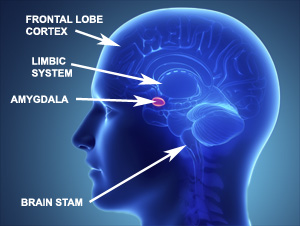
PTSD and the Amygdala
Research is progressing and to understand PTSD a brief explanation of what happens in the brain is given.
For example, if we see a lion, the information goes to the Amygdala, which is in the Limbic System and controls whether we should FIGHT or FLY or FREEZE in a serious situation.
If the situation is not serious, the information goes from the eyes to the brain to be processed in the normal order.

Conflict management
Children’s brains are not as developed, so the amygdala takes over when there is conflict by fighting or throwing things at each other. As children become adults and their brains develop, they resolve conflicts in a mature way by talking instead of throwing things.
However, if an adult suffers from PTSD, a similar phenomenon to that of childhood occurs, namely that the amygdala sometimes takes over.
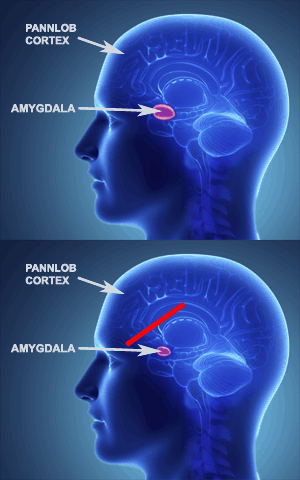
Kidnapped Amygdala
If a trauma caused PTSD, the amygdala may respond to various stimuli that are similar or reminiscent of the severe event. Information from the eyes or ears is blocked from reaching the brain (cortex) and the amygdala takes over immediately and reacts by FIGHT or FLYING, but that usually causes a person to become irritated or angry over small things.
Relationships can be affected if one party “goes on tiptoe” to avoid conflict because the other party can become irritated and angry over various small things. If they don’t get knowledge and help with PTSD, it can continue for life.

Therapy as treatment
Our brain is complex and all kinds of traumas mean that there is no miracle cure for PTSD. Some people are helped by PTSD therapy while others are not.
-(EMDR) involves thinking about the trauma when attention is directed to some repeated movement that makes new thought pathways in the brain
-(PE) teaches a person to get control by facing their negative emotions by talking about the trauma.
-(CPT) getting a person to write down thoughts about the trauma and getting keys to think differently.
-(FSM) with the help of Frequency Specific Microcurrent (FSM), Dr. Carolyn McMakin got much better from PTSD. Since 2005, she has treated and helped hundreds of PTSD patients.

Counselling as treatment
Lena’s PTSD was healed over time, partly through conversations with a psychologist and that she had a faith and a willingness to forgive, so she did not suffer from bitterness and psychosomatic illnesses. An important part was that for a year she got to talk about grief, pain and disappointment with a good psychologist who really listened to her story in 100% seriousness and did not explain things away.
She learned how important it is to speak in the “I” form, “I have been abused” and not the personless “someone was in a tragedy”.
She was traumatized during her teenage years because she was abused in her home and was forced to move away from home at the age of 16.
Now Lena is so whole that she has written a book and runs a clinic to help others, both girls and boys who have been abused.

Music as treatment
Jim is a war veteran, and since suffering from PTSD, he feels like he’s in a war zone even though he’s at home in Canada. He experiences flashbacks, war images and noises that repeat even during the day.
One day he found his guitar and started playing and he felt it helped him relax. It had such a positive effect that Jim collected guitars and gave them to other veterans.
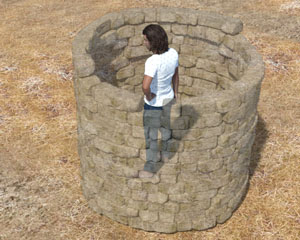
PTSD and the protective wall
If PTSD is caused by threats, abuse, infidelity, war and violence, it can be seen as 2 different consequences that form a common defence mechanism. One is the trauma caused by a person that makes a person build an invisible protective wall to avoid being hurt again. The other is PTSD and the Amygdala which makes a person react to different stimuli as a kind of unconscious self-defence.

Alternative treatment
If both Amygdalas’ defence mechanism is in place and an invisible protective wall is in place, it may take time to build up trust again. It can also take time to find a counsellor or psychologist you trust to help you move on with your life.
Almost the only thing that can get through these defence mechanisms is if you feel or experience love and forgiveness because when you relax, warmth and love can start to heal your inner self and dampen PTSD.
Listen to song: AMAZING GRACE – FORGIVEN (eng)
Listen to song: YOU ARE FORGIVEN (swe)


 EN
EN  SV
SV  ES
ES  RU
RU  KO
KO