
Getting stuck in grief or moving on after tragedy
The recovery after tragedy is often through help and knowledge of the grief process
Tragedy and grief for James Bond 007 actor

James Bond actor Brosnan suffered the unthinkable, his wife Harris died in cancer in 1991. The slow decline in her health and her eventual demise nearly ruined him.
Brosnan says “This is the first time in my life I’ve ever experienced bereavement, and it’s overwhelming,” and he continue “such things draw a mark across your heart and it’s always a part of your life, to watch someone you love have their life eaten away — bit by bit, by this insidious and horrid disease — becomes an indelible part of your psyche.
Actor Pierce Brosnan is most known for his role as secret agent James Bond 007 in four Bond films..
Laila about grief & shock after infidelity

Singer Laila Dahl talks about the shock when her husband Jan confessed to the infidelity when they were in the car: “Okay,” he said and handed me a photo. “This is my son. He’s 12 days.”
Everything was spinning. I thought: Is this the time for me to end up on the psyche? Can you survive a pain like this? How should the children take this..?
She writes that the first day after Jan’s confession was shock and chaos. The information Laila had received was simply too painful to take in.

It was a frightening encounter with a pain Laila had never experienced before.
The thought that he had someone else while we lived our life as usual made me physically nauseous, and at first he was not allowed to touch me.
I remember waking up at night with a racing heart and a stubborn hope that I had just had a nightmare. The realization that this was going on filled my stomach with a cold and equally irrevocable anxiety every time.
She tells something important she thought: I will not decay – and… I must not become bitter.
Jerry survived when 3 generations died

The tragedy that wasn’t supposed to happen, it did. After a great day at the Indian reservation, Jerry and his family headed to the vehicle to head home after dark. Ten minutes after leaving, Jerry slowed down when he saw an oncoming vehicle going upwards of 140 mph. On a curve, the oncoming vehicle crossed over on the wrong side and there was a head-on collision with Jerry’s minivan. The memories right after the accident were as if everything happened in slow motion. After recovering, Jerry looked around to try to assess the extent of the accident. Everything was chaotic and horror came over Jerry as he saw his wife and others injured and unconscious. He managed to get everyone out of the car and tried to take a pulse and do the mouth to mouth method. But panic and powerlessness hit Jerry when he realized he couldn’t save them. Jerry’s wife died, his four-year-old daughter died and his mother died. Three generations gone in an instant.
The scene of the accident was chaotic, with rescue workers, lights flashing, a helicopter buzzing overhead and several emergency vehicles. Jerry remembers the terrible feeling that came over him and he wondered if he would ever get out of the darkness and depression he was heading into. The absence was enormous and how could he cope with his three children who survived the incident. A few hours after the accident, the shock began to subside, but was replaced by anguish and powerlessness.
For the next few weeks, the grief and pain were almost unbearable and the tears were unstoppable. The three surviving children also experienced intense grief and fear. The depression was overwhelming and the very foundation of Jerry’s life was crumbling. Everyday chores and garbage were piling up. The tears continued for 40 days and then moved into a new deeper phase of grief where the tears were not enough.
Many helped in a wonderful way after tragedy
Many friends and relatives stepped up in a wonderful way to help Jerry and his children who survived the terrible tragedy. Jerry took time to process all the absence, grief and pain, the process took over 4 years until he found harmony within again. Now he can honestly say that “life is good again”. Jerry continued to work at the University and married Patricia in 2010.
A few years after the tragedy, Jerry wrote a book about the event that changed his life. In it, Jerry says he received thousands of letters after newspaper articles saying that “Three generations died in an accident.”
But he says it’s not possible to measure losses. The car accident came as a shock and to see your loved ones die and not be able to do anything was terrible. But getting cancer and dying off slowly is also a great sadness. Having children who are disabled and trying to help them day after day can also be experienced as a grief. There is no way to compare grief after different tragedies.
Losses and sorrows seem pointless, but you have to try to find bright spots in your life in order to move on.
Jerry Sittser, 2005, Hidden Blessings (Grace Disguised)
Jerry’s life story from the US shows that despite terrible tragedies that can happen to us, there is a future.
The landscape of grief
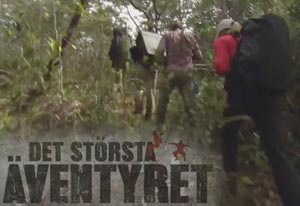
On TV, The Greatest Adventure was shown about how elite athletes were dropped into the wilderness and had to make their way to the nearest civilisation. They were not given food or a map or compass, but had to try to find their way anyway. All they got was a tent and clothes and an emergency phone. Although determined and well trained, they went in circles and got totally lost in the Malaysian jungle.
Just as they got lost in The Greatest Adventure, there are people who get lost in the landscape of grief and some wander there for the rest of their lives.
That’s why it’s important to have knowledge and understanding of what grief is, because it’s like having a map and compass of how to get through the grief process bit by bit.

Everyone can be affected
We spend a large part of our lives acquiring and maintaining the things that make life rich and meaningful in different ways: friends, wife or husband, children, work, health, housing, cars and material possessions.
But something happens inside us when something serious happens or we lose what is of value to us. Grief after tragic events is often painful and difficult. Unfortunately, there are many different events that can affect our health and cause grief and sadness:
-Loneliness: losing close friends and feeling lonely is often difficult
-Divorce: can be gruelling and painful for adults, children and family members
-Burnout: worked or studied too much, causing depression and resignation
-Abuse: violence or abuse causes trauma and deep wounds
-Separation: friendship or love relationship that crashes can cause sadness and depression
-Accident: car accident or workplace accident can cause disability
-Bullying: years of bullying at school or at work can damage self-confidence and zest for life
-Infidelity: damages trust and relationships and causes terrible grief
-Disaster: the Estonia disaster or natural disasters can ruin people
-War: traumatic experiences and nightmares

Various sorrows
Grief can be experienced differently and what causes grief varies for different people.
Some people think that single life is good. The ability to do what you want when you want without having to take someone else into account all the time.
While life as a single person can be very difficult for others. Especially if there is a constant longing to meet a life partner to marry, but can’t find one. Unwanted loneliness can cause a lot of grief and pain. Every time the question of single life comes up, it’s like the inner wounds are being torn open again. When your best friend invites you to a wedding, it feels uncomfortable. You want to show up for your best friend but you don’t want to go, because it just reminds you of the loneliness of being single while others are getting married one by one.
Major holidays such as Christmas, New Year and Midsummer can feel terribly lonely.
Sometimes the cause of a strong sense of loneliness can be rooted in tragedies and betrayals that happened earlier in life. Even sad events that you may not remember yourself may have caused wounds inside that have not healed.

When people get together, the conversation is often about what they do and what they work with. Many people’s identity is based on their profession, such as carpenter, technician, teacher or doctor. When a long-term job comes to an end, it can be felt that part of that identity has been damaged or lost. Uncle Svensson is 58 years old and has worked for 30 years in the same place where he likes. But when he is made redundant, it can cause distress and depression because who wants to employ an older person who is about to retire.
Or Auntie Larsson’s best friend is her little dog Ludde, whom she walks several times a day. But when Ludde dies, it causes Auntie Larsson great sadness and loss.

The state of Grief
Grief is a kind of state we enter when someone important to us has died or something tragic has happened. It is an uncomfortable existence that no one wants to be in. Dealing with grief always takes longer than anyone would like. It hurts, upsets, confuses and can be frightening. Like an intense inner pain that cannot be described in words.
The state of grief is experienced differently from one moment to the next, from one day to the next. The solid foundation of existence itself is experienced as it collapses. Like being thrown between despair, tears, hopelessness and depression. Can feel like the hopelessness of being alone and abandoned on a raft out at sea with no land in sight. Or like being in a sea of mud, the thick sticky goo sticking to your feet, every step feeling heavy and hard. Each day feels like an eternity and thoughts come if the grief ever ends. One sunny day the question may arise why the sky is so blue, when life is so grey.
It can also be compared to the waves of the sea. Working with grief is like being a cork, floating up and down between the crests and troughs of the waves. Emotional life is experienced in exactly the same way, it goes up and down, back and forth, but it moves forward slowly. Fighting grief is like standing in shallow water in the ocean and trying to stop big waves that keep coming, it’s exhausting and exhausting.

Different paths
Everyone is unique and valuable and we are all different, so we deal with grief in different ways. What makes us different is our genetic make-up and the environment in which we have grown up. How we view grief and how we deal with emotions is also influenced by the culture and environment in which we grow up. Some people grow up in a family where it is normal to show emotions and even talk about things that are difficult. Others grow up in an environment where it is almost taboo to talk about emotions and grief, it is considered tough not to show tears. It can be more difficult to let go of grief and dare to show emotions. Our different experiences mean that we process grief in slightly different ways. Unfortunately, there is no general formula that solves all problems. No two people are exactly alike and therefore no two grief situations are identical.
Some say that time heals all wounds, this is not true when it comes to grief after tragedies. We are so used to everything happening so quickly in our hamburger society. Processing grief takes time and there are no shortcuts.
Perhaps the hardest part is that no one can bear someone else’s grief. Everyone has to deal with their own grief. However, we can support each other and share our experiences and encourage those who are struggling.
Something that also influences is our personality. Extroverts and introverts often wish to handle grief a little differently. Extroverts who are outgoing are more likely to want people around them when they are processing grief. They may also find it easier to reach out to others for help and support when the going gets tough. While introverts may prefer to grieve quietly on their own and only sometimes wish to have people around them.
The important thing is that it is possible to get through the grief, there is a future even if everything can feel bleak after a tragedy. Reading and listening to people who have dealt with grief and come through it is a great support in the process, it makes it easier and increases understanding of what happens at different stages of the grieving process. Taking time and working through grief is a choice a person makes that is hugely important, because when the process is over it has a positive impact on family and friends alike.

Inner healing
Through newspapers and television we see tragic accidents happening around the world. Through the media, we see how people in Asia deal with grief a little differently than we do in the West. When a plane crashes or some similar disaster occurs. Then we see pictures or films of relatives crying in public and crying out their grief and pain. They really show their feelings and pour out their heart.
Everyone has the potential and ability to process grief. Maybe we should see it as a kind of tool to mend what is broken inside so that we become whole again. The problem is that we often lack the knowledge and understanding of how to process grief in order to bring harmony back to our inner selves. In our Western culture where material things are often the most important, this subject is often avoided because it is difficult to talk about. The difficulty of grieving and its deep impact is not acknowledged which makes it even more difficult to process it. Perhaps you have experienced the silence when friends and relatives avoid talking about the subject of grief. Or perhaps received an even more boring response when others say “Haven’t you gotten over it yet” or “I guess it’s time to move on with your life”. Such words weigh down the bereaved and make it even more difficult to process the grief.
People who experience tragedy and grief often feel different and think “I’m the only one experiencing this hardship”. If you feel this way, you are not alone. Most people have experienced grief after various tragic events. Reasons why people avoid talking about grief can vary.
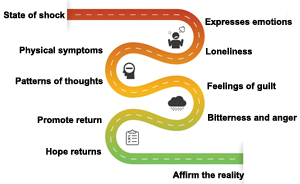
The mourning process
Some people who have studied the impact of bereavement on people who have lost a loved one believe that there is a pattern, a similar process that all bereaved people go through. Others argue that there are no phases, but that everyone grieves in their own way.
Whether there are different phases or not. It can provide an understanding that certain moments and emotions are often present in the grieving process and may recur again and again while other phases may pass almost unnoticed. Nothing is cast in concrete and the different phases of the process may occur in some variation depending on personality and the type of tragedy that has occurred:
-State of shock
Often when something tragic happens and grief becomes overwhelming, the body responds with a kind of numbing state of shock. It eases our pain so we have time to recover. The shock can last for a few minutes up to several weeks and even months if it is serious.
-Expresses emotions
Our emotions go on a rollercoaster ride as we begin to realise what has happened and how the loss affects us. Sometimes a storm of emotions and grief can come without warning. We need to allow ourselves to grieve and let the tears out so that we can begin to process of what has happened.
-Loneliness
An experience of being isolated and not caring. A feeling of depression and loneliness. It feels like walking in a dark tunnel with no end.
-Physical symptoms
Doctors have sometimes found links between unresolved grief and psychosomatic illnesses. Grief is something that must be actively worked through. Otherwise, all the unanswered questions and unresolved pain may grow into unforgiveness and bitterness. Forgiving oneself and others is vital.
-Patterns of thoughts
No matter how we try to think of something else, we keep coming back to the tragedy that happened. Almost to the point of desperation when it’s almost impossible to think of anything else. Like the man who lost his wife, “I think about her a thousand times a day”. The important thing is to change environment, have a hobby or meet people so you have something else to think about.
-Feelings of guilt
When a loved one dies, questions arise about what was done right and wrong to that person. Sometimes feelings of guilt arise, “why didn’t I help” or “I shouldn’t have said so and so”. Important to forgive yourself and work through the pain
-Bitterness and anger
Over time, the depression subsides and the feelings begin to return. Many questions about “why” also surface and are mixed with feelings of anger, rage and resentment. Some are ashamed of it and wonder “where did that anger come from, I who am usually so calm”. This is not strange, but part of the process.
-Promote return
Over time, the grief and pain become familiar and it can feel strange to break away from it. Returning to a normal life can feel as difficult as continuing to grieve. Everyone has forgotten the tragedy and who is going to mourn that person if I stop too!
-Hope returns
Streaks of light and hope penetrate the dark clouds. Although some sadness remains, you can see that some wounds have healed on the inside. Some memories or things
-Affirm the reality
Hope and faith in the future are returning. We are finally beginning to acknowledge reality. It doesn’t mean going back to your old self. The personality has evolved and matured.
Even after grief has been fully processed, there may be times when we experience grief. If it feels like tears are about to come, there may be a toilet or other room where you can be at peace for a while until it passes. It is not always possible to show your grief.
Usually we become softer and less judgmental after a period of grief. Our own experience has increased our awareness that others who are acting strangely may have gone through a terrible tragedy recently. And are in one of the stages of grief such as depression or anger. We may then be able to help and support others in their grief through the experience, knowledge and understanding we have gained ourselves.

Help or hinder
Many years ago, a friend and I went to Asia to help build orphanages. The trip took place during a problematic period in my life after a tragedy. While we were there, I tried to lighten my heart and tell my friend how bad I really felt. But my friend replied a bit cold-heartedly that it was “just to stand in faith” and “just to pray”. It was really not an answer that helped me. Rather, it felt nonchalant, so I decided not to tell her any more about how I felt.
But a few years later, this friend suffered a tragedy. His wife died after a short period of cancer and it took a heavy toll on him. He went to another city, started drinking and hanging out with people in the criminal world. One day he called me and told me where he was and that the police were watching him. I went to that town and picked him up and drove him home. At his home, I emptied all the alcohol bottles and took him to a meeting that changed his mind. After a few days he was stable enough so I could go home again.
This story wants to highlight the importance of being compassionate and trying to put yourself in other people’s shoes, before making statements about how easy it is. My friend who talked about “just believing” when I was having a hard time, it pushed me down instead of helping me. Later, when he himself suffered a tragedy. Then it wasn’t so easy, it wasn’t “just believing” when tragedy and grief were near and real.

Supporting the bereaved
After a tragedy, many family and friends feel uncomfortable and don’t know what to say or do for the bereaved. It is never possible to “fix” a person’s grief. But it is possible to help in other ways such as socialising, talking, running errands, vacuuming, washing dishes or taking their children to the playground. Above all, it is important to be a good listener.
Often, helping the bereaved can feel thankless because they don’t have the energy to show gratitude. Almost as if the bereaved are not quite themselves. That’s right, the mourner is in a “bubble” because all the energy is spent processing what has happened. There’s not much energy left to get involved in other things. Helping the bereaved is not something that can be fixed by a one-day effort. Because it can take months and you probably won’t get a Nobel Prize for it either. It’s not a hundred meter race, processing grief is a marathon that takes a long time. Yet the bereaved are in great need of help and support, more than they would like to admit. That’s why it’s important to support those affected by tragedy. Otherwise, they may never get over the grief and live in some kind of depression for the rest of their lives.
Examples of what to avoid saying because it weighs the mourner down even more:
– “come on now, life goes on”
– “I don’t understand why you’re still grieving”
– “it was only your aunt who died”
– “you should have listened to me, then this wouldn’t have happened”
– “just move on, there are more to choose from”
– “don’t you appreciate the rest of us who are still alive”
– “be glad it wasn’t your children”
– “it was just a dog, no one should feel that way about an animal”
– “it could have been worse”
Most important of all to help the bereaved is to be present. It works wonders, even if it doesn’t show on the surface, small positive things happen inside the mourner. If you can’t help practically, it is a great help just to listen, even if nothing is said.
Listening does not mean saying something when the mourner has stopped speaking. It’s about focusing on the content of what was said without judging it. Listening is trying to understand the other person’s situation and how that person feels. Those who have suffered tragedies often see everything through dark glasses, a dark and gloomy world. It does not help to argue or contradict what the bereaved person has said, because that makes the situation worse. It is better just to keep quiet. Being silent does not mean that you agree with what the mourner thinks. Listening is an art. It is trying to see the sufferer’s inner pain, grief, frustration, fear and sense of hopelessness.
If you want to listen to the thoughts of the bereaved, you can say “I want to hear what you have to say” in a nice way and try to sense the mood. If the mourner is not in the “mood” to talk, just being present is probably enough. Giving your time and just being there is an enormously important friendship for the bereaved.
Good books about processing grief

With vulnerability and honesty, Jerry Sittser walks through his own grief and loss to show that new life is possible – one marked by spiritual depth, joy, compassion, and a deeper appreciation of simple blessings. Loss came suddenly for Jerry Sittser. In an instant, a tragic car accident claimed three generations of his family: his mother, his wife, and his young daughter. While most of us will not experience such a catastrophic loss in our lifetime, all of us will taste it. And we can, if we choose, know the grace that transforms it. A Grace Disguised plumbs the depths of our sorrows, whether due to illness, divorce, or the loss of someone we love. The circumstances are not important; what we do with those circumstances is. In coming to the end of ourselves, we can come to the beginning of a new life
Title: Grace Disguised
Author: Jerry L. Sittser.
Book: Grace Disguised
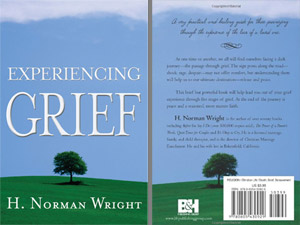
Sooner or later, we all face a dark journey – the passage through grief. Written to encourage anybody who has recently experienced loss, this short, powerful book guides readers through grief’s five stages: shock, rage, despair, release, and finally peace.
Title: Experiencing Grief
Author: H. Norman Wright
Book: Experiencing Grief


 EN
EN  SV
SV  ES
ES  RU
RU  KO
KO